

How to Choose a Car Phone Mount That Fits Your Car
A phone mount should keep navigation easy to see without getting in the way of safe driving. Before choosing a style, look at your dashboard, air vents, phone size and the areas where a mount can be placed without blocking controls or visibility.
Compare the Main Mount Types
There are three common styles, and each trades one advantage for another.
Vent mounts clip onto an air vent. They are compact, easy to move between cars, and keep the phone close to eye level. Their weakness is the vent itself: thin or round vents may not hold a mount firmly, and a heavy phone can slowly tilt the mount down. They also block airflow from that vent, which matters on hot days.
Dashboard mounts attach to a flat part of the dashboard, usually with a suction cup or adhesive pad. They offer a stable, flexible position and do not block a vent. Their weakness is the surface: a textured, curved, or dusty dashboard may not hold suction well, and adhesive pads can lose grip in heat. They also need a genuinely flat spot, which some dashboards do not have.
Windshield mounts use a suction cup on the glass. They give the most freedom of position and usually hold well on clean, smooth glass. Their weakness is placement: a mount in the wrong spot blocks part of the windscreen, and in some places local rules restrict what can be attached to the windscreen at all. They also put the phone farther from your hand, which can make tapping the screen awkward.
There is no universally best type. The right choice depends on your vents, your dashboard, and where you can place a phone without blocking anything important.
Check Your Car and Phone
Before ordering, check four things in your own car.
First, look at your vents. Are they horizontal slats, vertical slats, round, or a mix? A clip designed for horizontal slats may not grip vertical ones. Push a vent gently — if it feels loose or flimsy, a vent mount will wobble with it.
Second, look at your dashboard. Run a hand over the area where a mount would sit. If it is smooth and flat, a suction or adhesive mount has a chance; if it is heavily textured or curved, it probably will not hold. Check whether a mount there would block a screen, a control, or an airbag cover.
Third, weigh your phone as you actually use it — with its case on. A large phone in a thick case is heavier than the bare phone, and that extra weight is what makes mounts droop or slip. If you use a magnetic mount, check whether your case is magnetic-compatible or whether a metal plate is needed, and whether that plate interferes with wireless charging.
Fourth, think about charging. If you plug in a cable for navigation or music, the mount should leave the charging port accessible and the cable should not dangle across the gear shift or steering wheel.
Pay Attention to Visibility and Safety
A mount should make driving safer, not add a distraction. Place the phone where a quick glance shows the next turn, without taking your eyes far from the road. That usually means near the dashboard line, not low in the center console and not high in the middle of the windscreen.
Never place a mount where it blocks the windscreen, the mirrors, the instrument panel, or an airbag. An airbag deploys with serious force — a phone and mount in its path become a hazard. If you are unsure where the airbags are, check your car manual.
Local laws vary on windscreen attachments and on touching a phone while driving. Check the rules where you drive before choosing a windshield mount, and set your destination before you start moving. A mount does not make it safe to type an address at speed.
Think About Heat and Long Drives
Cars get hot, and heat is the enemy of mounts. Adhesive pads soften in direct sun, suction cups lose grip when the glass is hot and dusty, and a phone left in a sunbeam can overheat and dim its screen or shut down charging.
If you park in the sun, a vent mount has one advantage: cool air from the vent flows over the phone while you drive. But the same vent can also blow hot air onto the phone when the heater is on, so it is worth checking both seasons. For dashboard and windshield mounts, a shaded spot — lower on the dashboard, or on the side of the windscreen away from direct sun — lasts longer than the brightest position.
On long drives, stability matters more than it does on a short trip. A mount that holds fine for ten minutes can slowly sag over two hours as the car vibrates and warms up. If you regularly drive long distances, favor a mount with a locking arm or a stronger grip, and test it on a longer drive before trusting it on an important trip.
A Simple Buying Checklist
- Mount type chosen for my car: vent, dashboard, or windshield — not just the most popular one
- Vent shape and strength checked (if vent mount)
- Dashboard surface flat and smooth enough (if dashboard mount)
- Windshield placement legal and clear of my view, mirrors, and airbags (if windshield mount)
- Phone weight checked with case on; mount rated for that weight
- Magnetic compatibility checked, including wireless charging
- Charging port accessible with the phone mounted
- Phone within easy glance and easy reach, without blocking controls
- Heat considered: mount and phone not in the harshest sun spot
- Return or exchange possible if the fit is wrong in my car
Explore Related Picks
Start with the Car Phone Mounts category to see the mount styles covered here, then browse Interior Upgrades for the wider interior picture. If a tidy cabin matters to you, Car Organizers covers the small storage pieces that keep a car from collecting clutter. And if you want the same ‘choose in the right order’ thinking for your desk, see How to Build a Clean Gaming Desk Setup on a Budget.
Related Posts

This guide is about one specific listing: a 4K dash cam listed with parking monitoring, night vision, smart voice control and 24-hour automatic DVR, described as mini and easy to install. LanPicks has not tested this dash cam, and this guide reports no test results and no prices. What it does is separate what the […]

A dash cam records the road while you drive — and, with the right setup, while you are parked. The choice is not which model wins a roundup. It is which setup fits your car and your risk: front-only or front and rear, what resolution, and whether you need parking mode. This guide explains each […]
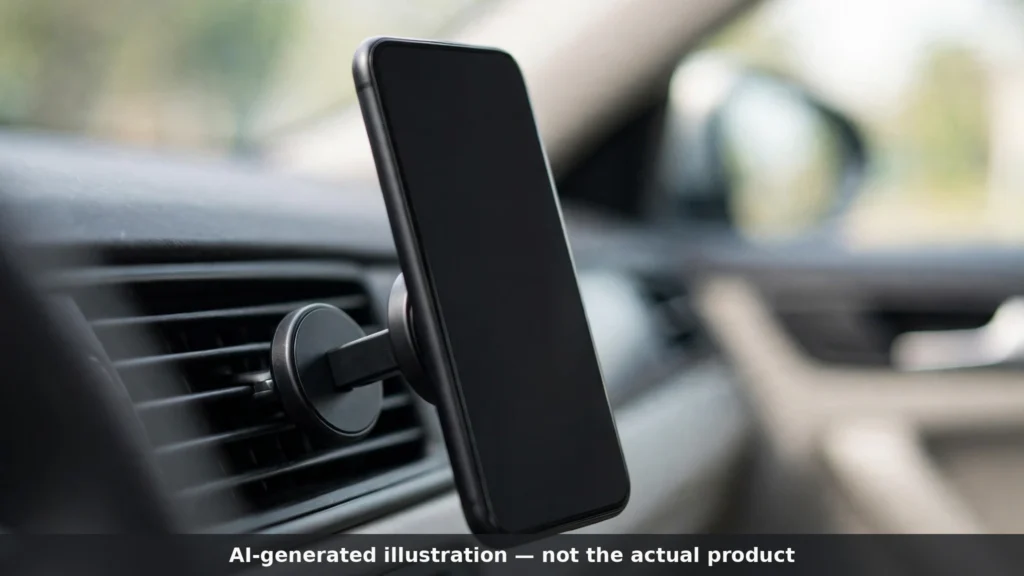
This guide looks at one AliExpress listing: “Magnetic Car Phone Holder Universal Air Vent Car Phone Mounts.” It is a magnetic holder that mounts on a car air vent, and the listing describes it as universal. This page explains what that wording does and does not promise, and the two checks that decide the fit. […]

Quick Decision If your car has sturdy, flat vent blades, start with a vent mount: it installs in seconds, moves between cars, and leaves nothing behind — but it blocks airflow and can sag under a heavy phone on weak blades. If your vents are round, recessed, or flimsy, a dashboard mount is the steadier […]
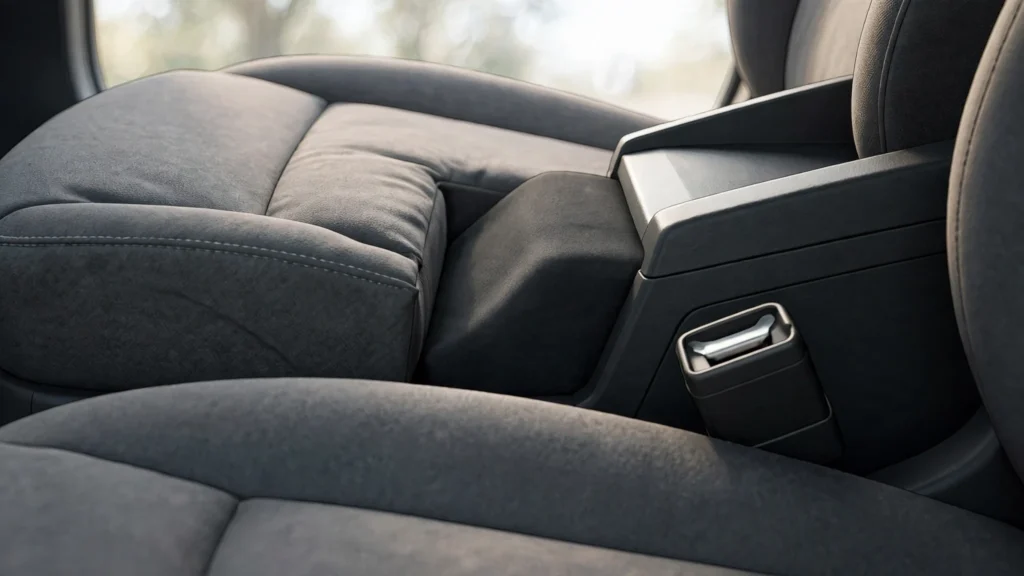
The gap between your seat and the center console swallows phones, cards, coins and crumbs — and the fix is cheap, but only if it fits. A filler that is too wide presses on the seat, one that is too narrow slides to the floor, and a rigid organizer in a gap that changes width […]