

How to Display Collectible Figures: Space, Dust and Lighting
A good figure display starts with a tape measure, not a shopping cart. Measure the tallest point of each figure and the footprint of its base, check what the shelf can hold and fit, then arrange tallest at the back and shortest in front, with room to breathe. Enclosed cabinets cut dust and bumps; open shelves are easier to reach and rearrange. Keep both out of direct sunlight — no standard clear case blocks UV on its own — and light with low-heat LEDs from the top front edge.

Quick Decision
Measure first: the tallest point of every figure — including hair, weapons and raised poses — and the width and depth of its base. Check the shelf for depth, height between shelves and load rating before buying anything else. Arrange in tiers — tallest at the back on risers, shortest in front — with breathing room between pieces. Choose enclosed cabinets for pieces you rarely move and want protected from dust; choose open shelves for pieces you handle, pose or rotate often. Keep the display out of direct sunlight and away from heat sources. Light it with low-heat LED strips along the top front edge of each shelf, pointing down. Dust enclosed displays every few weeks and open shelves weekly, with a soft brush or blower — and do not trust any standard clear case to be UV-proof, because it is not.
How this guide was put together. LanPicks does not test display furniture or figures hands-on. The planning steps, layout advice and care guidance here come from published collector guides and a display-case maker’s guide, checked on 13 November 2026. Where guides disagree on dusting frequency, this guide gives the range rather than a single rule. No prices, no UV-protection percentages and no resale-value claims appear here, because none of the sources verified them as measurements. The hero image is AI-generated; the diagram is an original conceptual drawing, not a measurement. See our Editorial Policy.
On this page
Measure Figures and Bases
Figures vary far more than furniture does. A collection can mix small chibi-style figures, standard scale figures and large resin statues on the same shelf. Measure before you buy anything — the numbers decide the shelf, the case and the risers, not the other way around.
For each figure you plan to display, measure three things. First, the height to the tallest point, with the figure standing on its base exactly as it will be displayed — include hair, horns, weapons, capes and any raised arm. Second, the base: its width and depth, since some bases are wider than the figure standing on them, and a base that overhangs the shelf edge can tip. Third, anything that sticks out sideways — a sword, a wing, a flowing cape — because that decides how close the next figure can stand. Write them down; the worksheet in the final checklist gives you the columns.
Measure by size band, not one figure at a time. Sort the collection into tall, medium and small, and note the tallest figure in each band. That tells you the shelf height you need and which pieces belong together: a tall statue at the back of a row of small figures hides everything behind it. Measure with any support stand attached — it is part of the footprint. And do not trust a listed scale on its own: two makers’ figures at the same stated scale can differ in height, and a listed height often excludes the base or the tallest accessory.
Check Shelf Limits
A shelf has three limits: depth, height and load. Check all three before a single figure goes on it.
Depth is the first limit. The base plus a little breathing room in front must fit on the shelf; if the base overhangs the front edge, the figure can tip. Shallow shelves suit small figures and single rows; deeper shelves suit wide bases and tiered risers. If you already own the shelf, measure its usable depth — back panel to front edge — and let that decide which figures live there.
Height between shelves is the second limit: the tallest figure plus enough clearance to lift it out without scraping the shelf above. Adjustable shelves help — move one up for a tall statue, down for a row of small figures. If a figure is taller than the gap, remove a shelf to create a double-height space rather than forcing it to lean.
Load is the third limit, and the one most often skipped. Shelves and wall mounts have stated load ratings, and heavy resin statues add up fast. Check the maker’s rating for the shelf and the anchors before loading. Wall shelves need anchors rated for the load and suited to the wall — a full row of resin statues can damage drywall if the anchors are undersized.
Location matters too. A display at eye level gets the most attention, so reserve that spot for the centrepiece. Avoid doors, high-traffic paths, vents and radiators, and keep figures out of damp rooms and away from heaters and drafts — sudden temperature changes and hot surfaces can warp resin and PVC.
Plan Visibility and Spacing
A display looks intentional when every figure can be seen and the arrangement follows one clear logic. Group by series, character, storyline or colour — one shelf, one group or one story. A shelf of figures from the same series reads as a scene; a shelf of unrelated figures reads as storage, however neatly it is lined up. A retro collection deserves the same treatment: group vintage or retro gaming figures as their own zone, so they read as one story instead of disappearing among newer pieces.
Use tiers to create depth. A single flat row wastes the shelf’s depth and hides everything behind the front figure. Clear acrylic risers lift the back row above the front row, so every face stays visible — tallest figures at the back on the highest tier, shortest in front. Acrylic is near-invisible, so the figures appear to float. Place the largest or most prized piece first as the anchor of the shelf and build around it, with the biggest figures toward the ends.
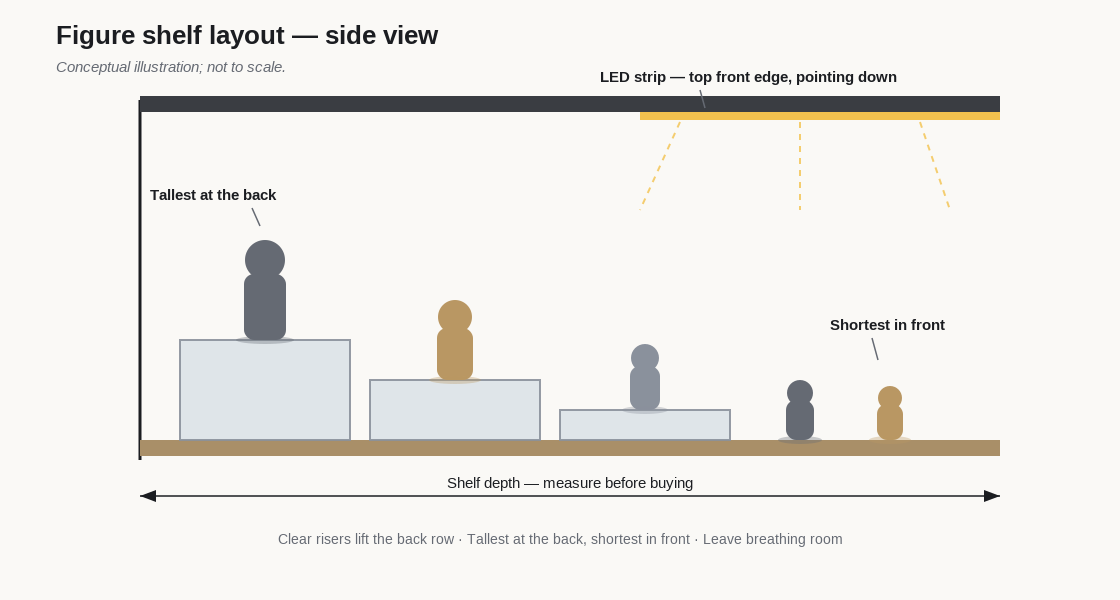
The diagram above shows the layout in side view: three riser tiers ascending toward the back wall, the tallest figure on the highest tier, the shortest figures in front, and an LED strip along the top front edge of the shelf above, pointing down. The shelf-depth arrow is a reminder to measure before buying — the diagram carries no dimensions.
Leave breathing room. Crowded shelves look chaotic, pieces lose their impact when squeezed together, and a fallen figure can knock its neighbours over in a chain reaction. Space pieces out more than feels natural — empty space acts as a visual frame. If the collection is larger than the display can hold comfortably, rotate pieces rather than cramming everything in at once.
Vary the poses. A shelf where every figure stands straight and faces forward reads as a store shelf. Turn some figures at an angle and let an articulated figure take a dynamic pose. Check the shelf from your usual viewing position: what looks balanced from above can look cluttered at eye level.
Open vs Enclosed Display
Open shelves and enclosed cabinets are both legitimate displays; they trade access against protection. The right choice depends on how often you touch the figures and how much dust and risk the room carries.
Swipe to compare all columns →
| Factor | Open shelf | Enclosed cabinet |
|---|---|---|
| Dust buildup | Needs dusting about every 1–2 weeks (guide estimate) | Needs dusting about every 4–6 weeks (guide estimate) |
| Bump and knock risk | Higher — figures are exposed to hands, pets and elbows | Low — glass or acrylic doors block accidental contact |
| Accessibility | Instant — pick a figure up, pose it, put it back | Open a door first; slower to rearrange |
| Visibility | Excellent with no glare | Excellent with good lighting; watch for glare on glass |
| Maintenance | Weekly dusting; more frequent checks | Monthly dusting; less frequent checks |
| Best for | Large, durable pieces you handle, pose or rotate often | Rare, fragile or valuable pieces you rarely move |
Enclosed cabinets cut dust dramatically, but they do not eliminate it — glass cabinets still need dusting, just less often. They also guard against bumps, curious hands and pets’ tails. Glass-door cabinets in the IKEA Detolf style are the starting point most collector guides cite — with the caveat that availability varies by market and some models have been discontinued, so check the maker’s current listing.
Open shelves are cheaper, easier to rearrange and better for pieces you pose often. Their cost is maintenance: dust settles on every surface, and every figure is one knock away from the floor. A clear acrylic panel across an open shelf front is a middle step — barely visible, and it cuts the chance of a bump knocking a figure off.
Whichever you choose, fit matters more than the label on the box. For a single-figure case, check the interior dimensions against the figure and its base — a case that does not fit is not a display solution.
Light and Material Care
Sunlight is the bigger risk. Collectible figures are typically painted PVC, ABS or resin, and prolonged exposure to sunlight fades painted surfaces, yellows clear or white plastic, and can warp softer vinyl over time. Keep the display out of direct sunlight — even through a glass cabinet door. UV damage is cumulative and irreversible, so place the display on a wall without direct sun, or add UV-filtering film or curtains to a nearby window. Standard clear cases do not block UV effectively.
For the light you do add, use low-heat LEDs. LED strips along the top front edge of each shelf, pointing down onto the figures, give even, shadow-free light without shining into the room. Warm white (2700–3000K) creates a cozy gallery feel; cool white (4000–5000K) shows truer colours on brightly painted figures. Avoid coloured LEDs for general lighting — coloured light washes out the paint detail that makes a figure worth looking at. Hot bulbs can warp PVC over time, so use low-heat LEDs only; a small puck light works well for a single centrepiece figure.
Keep the room stable. A retailer care guide recommends about 15–25 °C (59–77 °F) with relative humidity between 40–60% for resin and PVC pieces. Silica gel packs inside a cabinet can help absorb excess moisture in a humid climate. Do not store figures near chemicals, paints or adhesives whose vapours can react with coatings or paint.
Dust gently and regularly. A soft makeup-style brush or a clean microfiber cloth sweeps dust off without scratching paint; a rubber-bulb air blower dislodges dust from hair sculpts, folds and weapon hands. Blow first, then brush — blowing grit out of crevices before brushing avoids dragging it across the surface. Never use rough cloths or paper towels on a figure, and never use paper towels on a clear plastic case either — they are abrasive enough to leave fine scratches. For smudges on a case, use a lightly dampened microfiber cloth; avoid ammonia-based cleaners, which can cloud clear plastic.
Clean only when a figure actually needs it, and cautiously. Check the maker’s guidance first — some statue lines have specific care sheets. If light grime remains after dusting, a very diluted solution of lukewarm water with a drop or two of mild unscented dish soap and a soft cloth may be used, working in small areas and never soaking the piece; never use hot water, which may soften or warp plastics. Test any damp cleaning on an inconspicuous spot first, and dry the figure fully before returning it to the display. Avoid harsh cleaners, solvents and alcohols unless the maker explicitly allows them.
Handle figures by their sturdiest parts. Lift a figure by its base or reinforced torso, never by a weapon, head, arm or thin appendage, and use two hands for heavier pieces. Wear cotton or nitrile gloves for prized pieces — finger oils can mark paint over time. Museum putty or gel under the feet keeps top-heavy figures from tipping. Inspect the collection periodically for paint lifting, cracks, warping or discoloration, and photograph the finished display: slow fading is easy to miss in person and obvious in a photo taken a few months apart. Keep the original box and paperwork; guides note they help if a piece is later moved, insured or sold.
Display Planning Checklist
Before you buy a shelf, a case or a light, fill in the worksheet. It takes ten minutes and prevents the most common beginner mistake: display furniture that is too shallow for the figures or too short for the tallest piece.
Swipe to see all columns →
| Figure or group | Height to tallest point | Base width × depth | Shelf / spot | Notes (riser? light? dust?) |
|---|---|---|---|---|
| Tallest figure in the group | Your measurement | Your measurement | Eye-level shelf | Needs the highest riser tier; check shelf height |
| Mid-size figures | Your measurement | Your measurement | Same shelf, middle tier | Group by series; leave breathing room |
| Smallest figures | Your measurement | Your measurement | Front row, lowest tier | Riser only if hidden behind others |
| Spare / rotation pieces | Your measurement | Your measurement | Stored, cool and dry | Rotate in every few months |
The rows above are placeholders, not dimensions — fill in your own measurements. Once the worksheet is done, run the checklist: every figure measured to its tallest point and base; shelf depth, height between shelves and load rating checked; figures grouped by series, story or colour; risers planned so the back row stays visible; open or enclosed decided per shelf; display placed out of direct sunlight and away from heat and damp; low-heat LED strips planned along the top front edge; museum putty under any top-heavy figure; and a dusting routine set for the shelf type.
FAQ
Can I display figures on an open shelf, or do I need a cabinet?
Both work. An enclosed cabinet suits rare, fragile or valuable pieces you rarely move — it cuts dust and blocks bumps. An open shelf suits pieces you handle, pose or rotate often, because access is instant. The trade-off is maintenance: open shelves need dusting about every week or two, enclosed cabinets about every four to six weeks.
Do display cases block UV light?
Standard clear plastic cases do not block UV light effectively, and neither does ordinary glass. UV-protection cases made with treated materials filter more ultraviolet light, but even those do not block it completely. Keeping the display out of direct sunlight is the single most effective step, whatever the case is made of.
How do I keep dust off my figures?
Enclose what you can, and dust the rest. Use a soft makeup brush or microfiber cloth, and a rubber-bulb blower for crevices — blow first, then brush, so grit is not dragged across paint. Dust enclosed displays every few weeks and open shelves weekly. Never use paper towels or ammonia cleaners on figures or clear cases.
What lighting is safest for figures?
Low-heat LED strips along the top front edge of each shelf, pointing down. Warm white (2700–3000K) feels cozy; cool white (4000–5000K) shows truer colours. Avoid coloured LEDs for general lighting, and keep the display out of direct sunlight — it fades paint and yellows plastic even through glass. Switch the lights off overnight to limit total exposure.
How do I stop tall figures from hiding small ones?
Use tiers. Put the tallest figures at the back on clear acrylic risers, the shortest in front, and leave breathing room between pieces. Group by series or story so each shelf reads as one scene, and rotate pieces every few months.
Conclusion
Measure first, arrange in tiers, protect from sun and dust, and keep the setup simple enough to maintain. A display that is easy to dust and rearrange will look better in a year than an elaborate one that becomes a chore. The figures are the point — the shelf, the risers and the lights exist to make them visible and keep them safe.
Sources
- SB Hinter — DIY Character Display: Showcase Your Figures & Standees Like a Pro (planning, risers, grouping, DIY backdrops; accessed 13 November 2026)
- Pioneer Plastics — Action Figure Display Cases: A Collector’s Guide (case fit, UV reality, cleaning clear plastic; accessed 13 November 2026)
- Superhero Toystore — Action Figure Care Tips: Protect Your Resin & PVC Statues (temperature and humidity, dusting, cleaning, handling; accessed 13 November 2026)
- GadgetsFeed — How to Display Figurine Collection | Museum Looks At Home (cabinet types, grouping, risers, lighting, museum putty; accessed 13 November 2026)
- ToylandEU — Creative Ways to Display Your Toy Collection Beautifully (open vs enclosed, dusting frequency, UV, rotation; accessed 13 November 2026)
- AnimePapa — Guide to Building a Themed Display for Your Anime Figures (themed displays, risers, LED colour temperatures, rotation; accessed 13 November 2026)
Related Posts

Never pay a tested price for an untested system. A used retro console is decades-old electronics with no self-diagnostics and no error codes, so “works” has to be checked layer by layer: it powers on, produces stable video and audio, loads and plays a game, and keeps working for fifteen to twenty minutes — on […]

Buy the handheld that plays your games — not the one with the longest compatibility list. Write down the systems and the five or so games that would make or break the purchase, then check each candidate against that list: does the screen shape fit those games, do the controls suit them, and is there […]

Two light formats cover almost every display cabinet: LED strips for even light across a full shelf, and puck lights to spotlight a single piece. Neither is universally better. The right choice depends on what you want the light to do — wash a whole shelf or pick out one figure — and the right […]
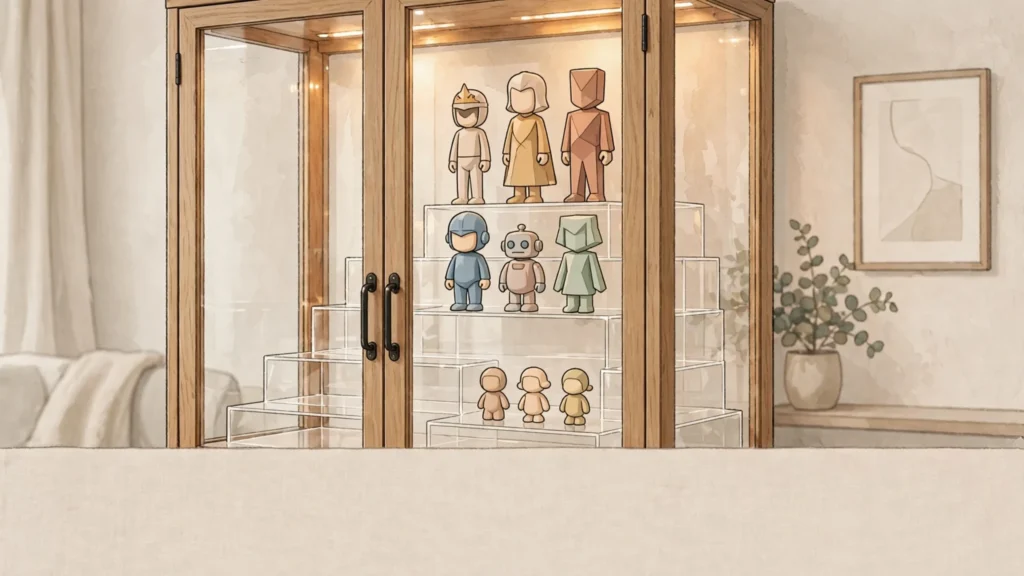
A riser is a small decision that changes the whole shelf: it lifts the back row above the front row so every figure can be seen, instead of hiding behind the one in front. Choose it by measurement, not by eye. Measure the base of each figure and the depth of the shelf, work out […]

An acrylic case and a glass case can look almost identical on a shelf — clear panels, a base, figures inside. The difference shows up later: when you lift the case to rearrange a figure, when you wipe it for the tenth time, when it gets knocked, and when you check whether the “UV protection” […]