

Baseus A5 vs A5 Air: Which Car Vacuum Fits Your Car?
The Baseus A5 and the Baseus A5 Air look like the same vacuum. They share the same body, the same cyclone system, the same vacuum-compression trick and the same smart blockage alarm. The short answer: the A5 states the higher peak suction — 16,000 Pa against the Air’s 12,000 Pa, a 27.75 Wh battery against 22.2 Wh, and up to 35 minutes of runtime in Eco mode against 25. The Air answers with a faster charge — about 2.5 hours against about 3.5 — a more complete accessory kit, and a motor that spins faster while sucking less. Before anything else, check the model code: the A5 is C30459500111-00 and the A5 Air is C30459500111-02. The two digits at the end are the whole difference on the box.
In this guide:
- Check the model code first
- Suction and motor: faster is not stronger
- Battery and runtime
- Charging: smaller battery, faster charge
- Accessories: what is in the box
- What both share
- How to decide
- FAQ
- Sources
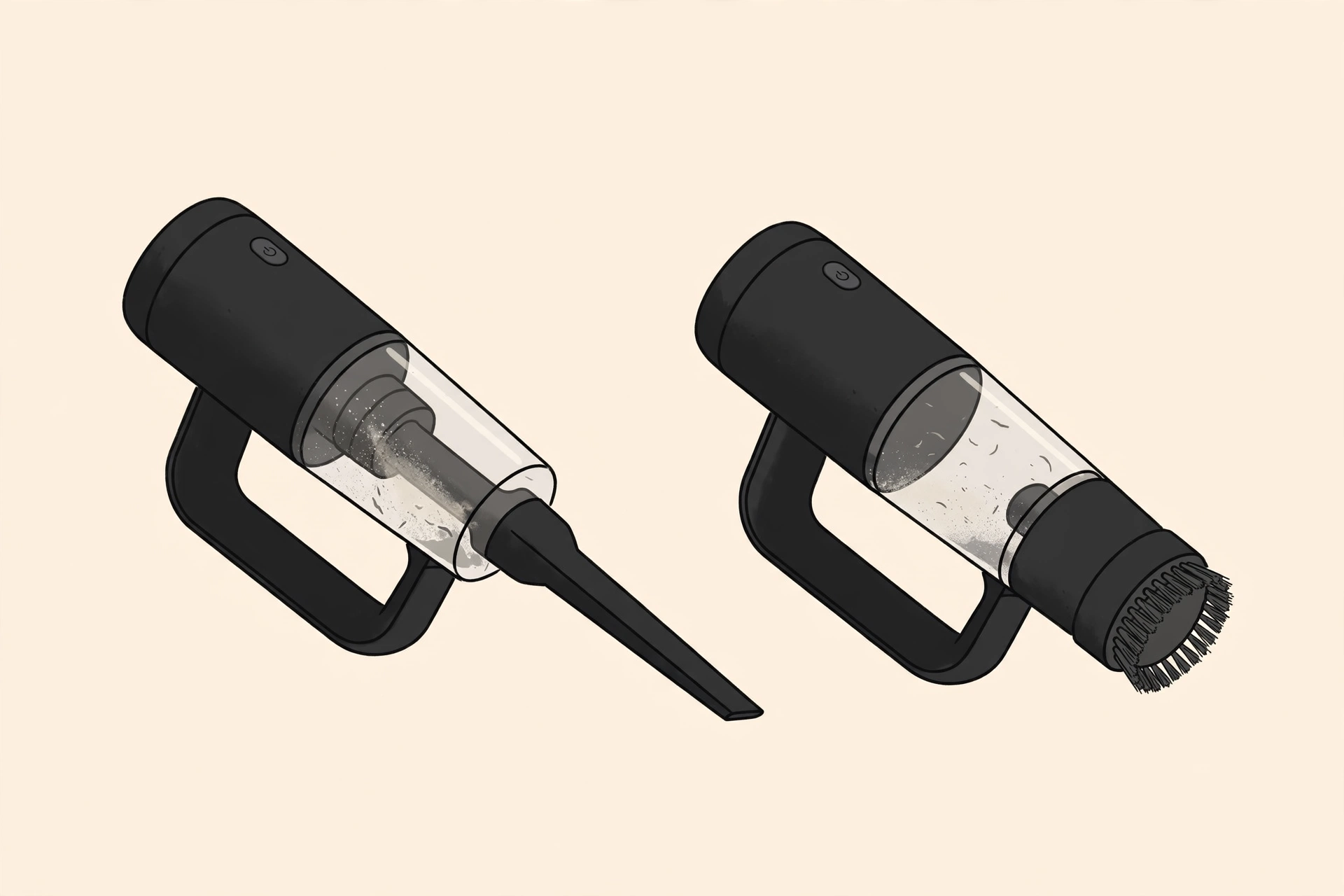
Check the model code first
The two vacuums are sold under one family code, and the suffix is the model. The Baseus A5 instruction manual lists the product code as C30459500111-00. Retailer listings for the A5 Air list the producer code as C30459500111-02. Same family, different suffix: -00 is the A5, -02 is the A5 Air. If the listing you are reading shows neither code, the suction figure is only a secondary clue — 16,000 Pa points to the A5 and 12,000 Pa to the Air — so confirm the code before you buy.
One more code to know about, because it causes confusion. The AliExpress listing for the A5 states a different model number again, CRXCQ02-01. That is the code on that listing, not the Baseus product code. Our Baseus A5 check covers that listing in full, including the four places where it disagrees with itself. For this comparison, the figures below come from the two instruction manuals, which agree with each other on the shared numbers and disagree only where the models genuinely differ.
Suction and motor: faster is not stronger
The headline difference is suction. The A5 manual states a 130 W brushless motor delivering up to 16,000 Pa, with a rotating speed of up to 60,000 rpm and air speed up to 8 m/s. The A5 Air manual states a 90 W motor delivering up to 12,000 Pa, with a rotating speed of 80,000 rpm. The Air spins faster and sucks less. Motor speed is not suction: the A5 reaches 16,000 Pa at up to 60,000 rpm, while the Air spins faster — 80,000 rpm — to reach a lower 12,000 Pa peak. On air speed, the A5 manual states up to 8 m/s and the official Baseus store page for the A5 Air states 7.5 m/s. Both are stated maxima with no test conditions published, so the 0.5 m/s gap is not a measured cleaning difference — do not read it as one.
The A5 has two suction modes. The listing states Eco mode at 9,000 Pa and Strong mode at 16,000 Pa, and the 35-minute runtime is stated for Eco mode. The A5 Air manual describes two modes as well — a standard mode and a Power Mode, switched by pressing the power button again — but it states no per-mode suction figure, only the 12,000 Pa maximum. Do not assume the Air’s Power Mode matches the A5’s Strong mode; the manuals give no figure that supports it.
Both manuals state the same cyclone system: centrifugal force separates dust and air, which keeps suction steady and stops the filter clogging. The Red Dot Design Award page for the A5 confirms the same two features — the intelligent dust blockage reminder and the cyclone technology — and adds that the centrifugal force protects the filter and enhances suction. Neither manual gives a suction figure for a clogged filter, so treat the cyclone as a maintenance feature, not a second suction number.
Battery and runtime
The battery is the biggest gap between the two. The A5 manual states a 7,500 mAh / 27.75 Wh ternary lithium battery, providing up to 35 minutes of operation in Eco mode. The A5 Air manual states a 2,000 mAh / 11.1 V / 22.2 Wh battery, and retailer pages for the Air state up to 25 minutes in Eco mode. Compare the two on energy, not on milliamp-hours: 27.75 Wh against 22.2 Wh. The milliamp-hour figures are rated at different voltages — the Air’s 2,000 mAh is rated at 11.1 V — so a direct mAh comparison would mislead. And neither energy figure predicts runtime: the Eco runtimes are stated separately, 35 minutes against 25.
Neither manual states a runtime for full-power mode, so there is no stated figure for how long either vacuum runs at maximum suction. Plan on less than the Eco figure at full power for both. The A5 blog’s listing read also records a second runtime figure for the A5 — a working time of “30min+10” in the specs table — which the listing does not explain; the 35-minute Eco figure is the one the manual states, so it is the figure to use.
Both batteries are non-replaceable in the A5 manual’s words, and both manuals warn against prolonged exposure to extreme temperatures — the A5 manual names leaving the vacuum in a car under direct sunlight in very hot climates as the example. A car vacuum lives in a car, so that warning is worth reading as a storage rule rather than a footnote.
Charging: smaller battery, faster charge
The Air loses on battery and wins on charging. The A5 manual states an input of 5 V / 2.8 A and a charging time of about 3.5 hours over USB-C. The A5 Air manual states an input of 5 V / 3 A and a charging time of about 2.5 hours over USB-C. The Air’s smaller battery charges in roughly an hour less, on a slightly higher input current.
Two practical notes follow from those numbers. First, the charging cable is USB-C on both, and the A5 Air manual notes the power adapter is not included — charge from a wall adapter, a car charger or a computer USB port, as the A5 manual lists. Second, the A5’s own listing disagrees with its manual on charging time — the comparison table on the same listing states 5.5 hours against the specs table’s 3.5 hours — and the manual’s 3.5-hour figure is the one to use. The comparison in this guide uses manual figures for both models, so the charging gap is 3.5 hours against 2.5 hours, not the listing’s confused 5.5.
Accessories: what is in the box
The Air’s kit is the more complete of the two. The A5 Air manual lists the vacuum, a crevice nozzle, a brush-and-suction nozzle, an air pumping nozzle, a USB-C charging cable and a storage bag. A retailer page for the Air adds a small cleaning brush. The crevice nozzle is for narrow gaps and corners; the brush-and-suction nozzle is for surfaces that need brushing and suction, such as carpets and air vents; the air pumping nozzle is for vacuum compression of storage bags.
The A5’s kit is simpler. The A5 manual lists the vacuum, a 2-in-1 crevice nozzle and brush head, a USB-C charging cable, a HEPA filter pre-installed, and the user manual. The 2-in-1 nozzle does the job of two of the Air’s nozzles in one piece: crevice tool with the brush extended, or crevice tool alone. For vacuum compression, the A5 manual describes a silicone air nozzle fitted into a large air nozzle on the exhaust port — the same compression job as the Air’s air pumping nozzle, reached with two pieces instead of one.
The difference is real but narrow. The Air gives you a separate brush nozzle, a storage bag and a cleaning brush; the A5 gives you one combination nozzle and no storage bag in the manual’s list. If the vacuum will live in the car, the Air’s storage bag is the more useful extra. If it will live in a drawer, the A5’s single 2-in-1 nozzle is one fewer piece to lose.
What both share
Most of the vacuum is identical, and the identical parts are the ones that decide daily use. Both have the same body: 33.4 cm tall, 6.1 cm wide, 10.1 cm long, in Cluster Black. Both have a dust bin of 150 mL — the A5 manual states “about 150 mL” and the Air manual states 150 mL — so both are small-bin vacuums for crumbs, dust and debris, not large clean-ups. Both are rated under 65 dB for noise. Both have a washable HEPA filter: the A5 manual states a 99.99% dust filtration rate for particles as small as 0.3 microns, and both manuals say to wash the filter after five or six uses and let it dry completely before reinstalling it.
Both have the smart blockage alarm: a red LED indicator flashes when the dust bin is full, and the manuals describe a long beep when the motor is blocked. Both empty with one button press. Both do vacuum compression — removing air from storage bags through the exhaust port — and both manuals describe the same four steps: remove the dust bin, fit the large air nozzle, insert the silicone nozzle, place it on the bag valve and run the vacuum.
One shared gap is worth stating. Neither manual states a warranty duration, an IP dust or water rating, or a HEPA grade beyond the A5’s filtration claim. The A5 Air manual lists RoHS, FCC and CE certifications; the A5 manual lists the same plus KC in its certification image. Do not buy either for wet messes: both manuals warn against water, liquids and flammable material, and neither states a wet-and-dry function.
One more shared fact cuts against the names. The A5 Air is heavier than the A5: 0.75 kg against 0.71 kg, on the same body. “Air” describes the lighter suction and the smaller battery, not the weight in the hand. The difference is 40 grams — small, but it runs the wrong way from what the name suggests, so it belongs in the open.
How to decide
Work through the checks in order. Each one rules something out, and the first two — the code and the suction — settle most purchases.
- Read the model code. C30459500111-00 is the A5; C30459500111-02 is the A5 Air. If the listing shows CRXCQ02-01, that is the A5 on AliExpress. If it shows neither code, the suction figure is only a secondary clue: 16,000 Pa points to the A5 and 12,000 Pa to the Air — confirm the code before you buy.
- Decide on suction first. The A5’s 16,000 Pa against the Air’s 12,000 Pa is the gap that matters for floor mats, seat seams and pet hair. If the car is heavily soiled, the A5’s extra suction and longer runtime are the reasons to pick it.
- Decide on runtime second. 35 minutes in Eco mode for the A5, 25 for the Air. Neither manual says how long a full interior clean takes, so treat both figures as Eco-mode maxima, not as a promised cleaning session — and neither manual states a full-power runtime.
- Check the charging time against your routine. About 3.5 hours for the A5, about 2.5 for the Air, both over USB-C. If the vacuum charges overnight, the gap does not matter; if it charges between errands, it does.
- Count the nozzles you will actually use. The Air’s separate brush-and-suction nozzle and storage bag suit a car-kept vacuum; the A5’s single 2-in-1 nozzle suits a drawer-kept one. Do not pay for nozzles that will stay in the bag.
- Do not buy either for blowing air. The A5’s listing disagrees with itself on the blow function, and neither manual describes blowing as a function. The air nozzle on both is for vacuum compression — removing air from storage bags — not for blowing dust out of vents. Our portable car vacuum buying guide covers the general checks — suction claims, battery and bin size — that apply to any handheld in this class.
- Check the bin. Both hold 150 mL. A full car clean may need the bin emptied part-way through on either model; if that sounds like a chore, a larger handheld or a full-size vacuum fits better, as the ILIFE A30 Pro guide and the robot vacuum buying guide show for the bin-size question in general.
FAQ
How do I tell a Baseus A5 from an A5 Air?
Check the product code. The A5 is C30459500111-00 and the A5 Air is C30459500111-02 — the same family code with a different suffix. If the listing shows no code, the suction figure is only a secondary clue: 16,000 Pa points to the A5 and 12,000 Pa to the Air. Confirm the code before you buy — the figure alone does not prove the model. The AliExpress listing for the A5 also states the code CRXCQ02-01.
Is the A5 Air lighter than the A5?
No. The manuals state 0.75 kg for the A5 Air and 0.71 kg for the A5, on the same 33.4 × 6.1 × 10.1 cm body. “Air” refers to the lighter suction and smaller battery, not the weight.
Which one charges faster?
The A5 Air, at about 2.5 hours against the A5’s about 3.5 hours, both over USB-C. The Air’s input is 5 V / 3 A against the A5’s 5 V / 2.8 A, and its battery is smaller, so it fills faster.
Does either one blow air?
Neither manual describes blowing as a function. The A5’s listing disagrees with itself — its headline states blowing and suction, while its comparison table marks the wind blower with an “x” for the A5. The air nozzle on both models is for vacuum compression, removing air from storage bags. Do not buy either for blowing.
Sources
- Baseus A5 16000Pa Wireless Car Vacuum Cleaner — Instruction Manual (Manuals+)
- Baseus A5 Air Car Vacuum Cleaner — Instruction Manual (Manuals+)
- Red Dot Design Award — Baseus A5 Car Vacuum Cleaner
- digitec — The best Baseus Vacuum cleaners for 2026
- iPoncomp — BASEUS A5 Air Car Vacuum black
- Baseus Poland — Baseus A5 Air Car Vacuum Cleaner 12000Pa 90W (official Baseus store, in Polish)
Related Posts
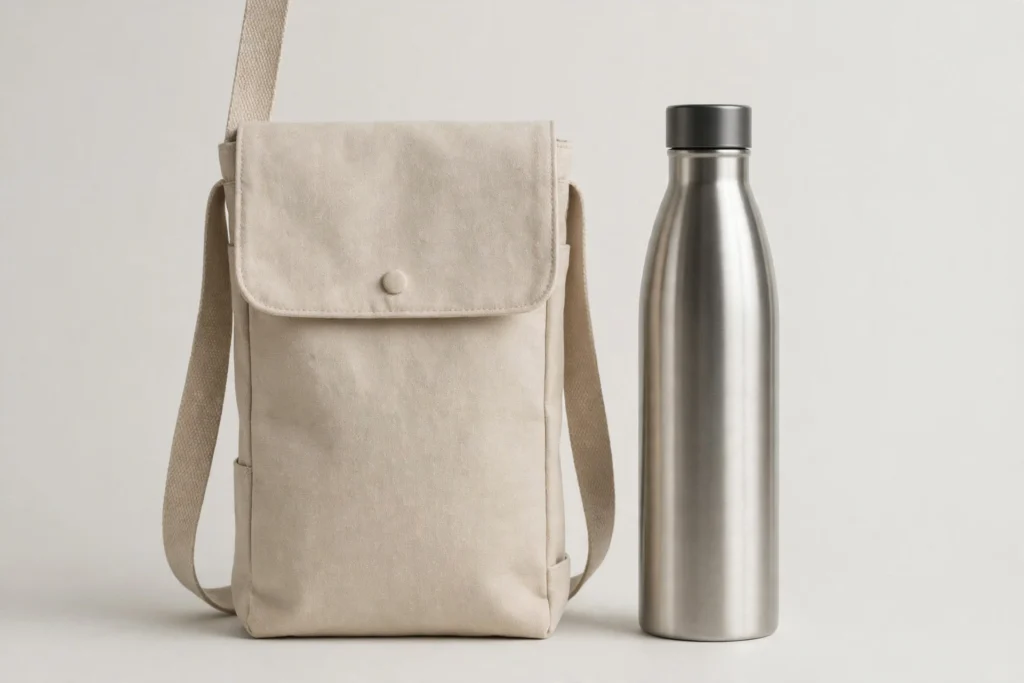
Yes, if the bag has enough usable interior space and the bottle can pass through the opening. Measure your bottle with the cap on, then compare its height and widest point with the bag’s interior height, width, depth and opening. A 500 ml bottle has no fixed dimensions. The 21 × 7 cm (8.3 × […]

You do not need special translation earbuds to hear live translations in your ears. Google Translate’s Live translate works with any pair of headphones — Google’s own words — on Android and on iPhone. The short answer: pair your Bluetooth earbuds, open the Translate app, tap Live translate, and pick a mode. Listening mode plays […]

A replacement filter or brush listing is a claim, not evidence. The listing says “HEPA”, “OEM-quality”, or “lasts twice as long” — and none of those words can be checked from the listing page. This guide compares filters and brushes by evidence you can gather yourself: measure the old part, test the HEPA claim against […]
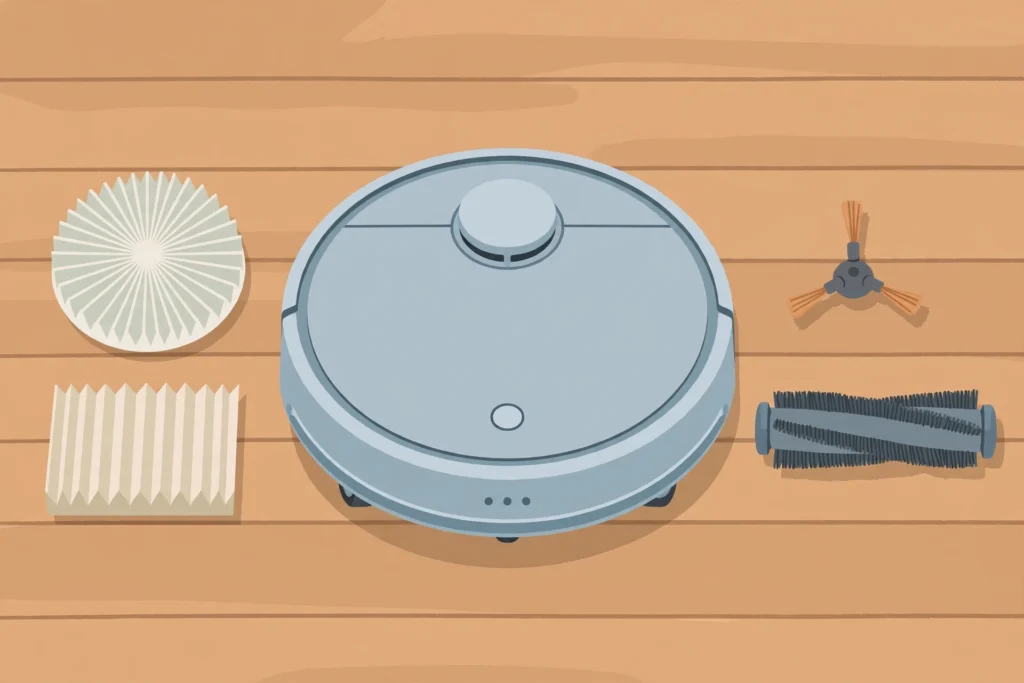
One rule decides whether a replacement part fits your robot vacuum: match the exact model number, not the name on the box. Two robots can share a name and take different filters, brushes, or dust bags, and a listing that names your series but not your exact model has not confirmed anything. This guide is […]

Three checks decide whether a small home appliance fits your home: the space it will actually work in, the voltage and frequency on its rating plate, and the plug and circuit it will run on. Skip any one of them and the appliance can arrive too tall for the shelf, rated for a different mains […]